Claiming family overseas as dependents in Japan: what remittance records do you need?
To claim a family member living overseas for the dependent deduction (扶養控除), you need a document that shows the person is your relative and a record of money you sent to that person in that year. A record is needed for each family member, and it counts for the year of the date you sent the money.
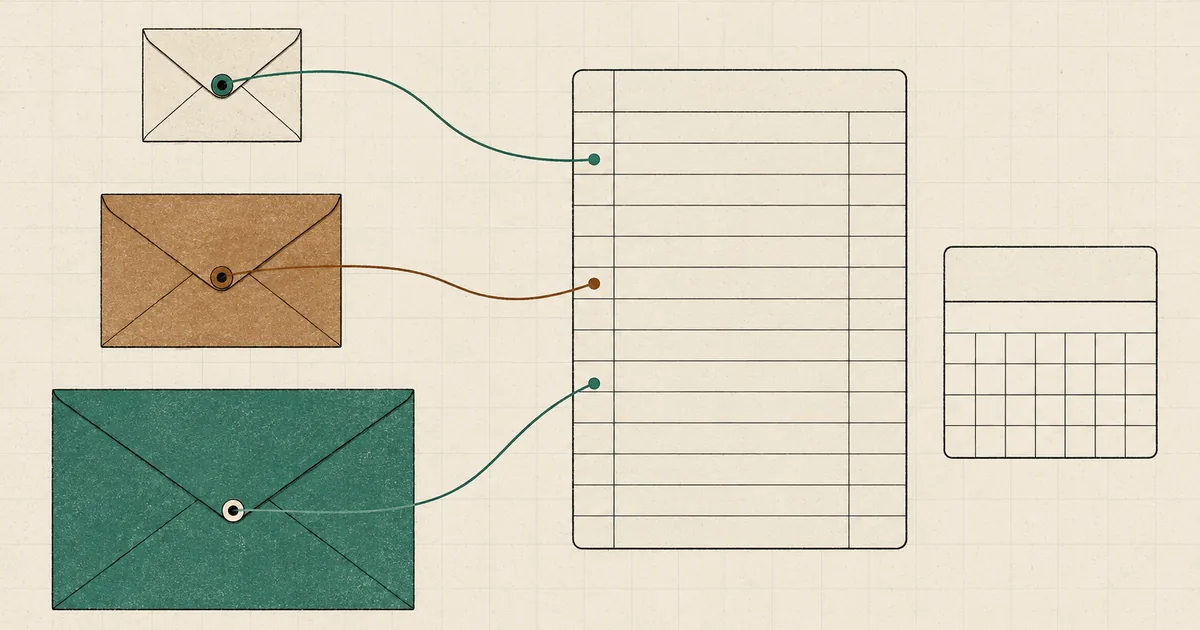
People who work in Japan and send money to family in their home country can, in some cases, claim that family member for the dependent deduction (扶養控除). But for family living outside Japan (called 国外居住親族, relatives living outside Japan), you need to submit to your employer or the tax office a document that shows the person is your relative, and a record that you sent living expenses or similar money to that person in that year. A record is needed for each family member, and handing over cash does not count as a record.
This article is based mainly on the National Tax Agency (NTA) Tax Answer pages and its Q&A on the dependent deduction for relatives living outside Japan, withholding income tax (「国外居住親族に係る扶養控除等Q&A(源泉所得税関係)」, revised August 2026 (Reiwa 8)). It explains in order which family members qualify, what records are needed and when to submit them. It does not cover how much your tax changes. For your own case, check with your employer for the year-end adjustment (年末調整), or with the tax office for a final tax return (確定申告).
Whether a family member qualifies depends on their age
According to the NTA, for income tax for 2023 (Reiwa 5) and later years, a dependent relative living outside Japan qualifies for the deduction only if the person fits one of the following. Age is judged as of December 31 of that year.
- A person aged 16 or over and under 30
- A person aged 70 or over
- A person aged 30 or over and under 70 who no longer has an address or residence in Japan because of study abroad, who is a person with a disability, or who receives ¥380,000 or more in that year from the taxpayer as living expenses or education expenses
For family members aged 30 or over and under 70 who do not fit any of the three, the NTA states clearly that the dependent deduction does not apply (「扶養控除の適用はありません」). If you send money to parents or brothers and sisters of working age, the deciding point is whether the third condition, "payment of ¥380,000 or more", is met.
The NTA glossary explains a relative living outside Japan (国外居住親族) as a relative who is a non-resident, meaning an individual who has no address in Japan and has not had a residence in Japan continuously for 1 year or more up to now. Not every family member who is overseas fits this. For example, the NTA explains that a child on short-term study abroad that normally ends in less than 1 year is not a relative living outside Japan. For family members who are not relatives living outside Japan, the ordinary dependent deduction rules apply, not the document rules covered in this article. If you are not sure which applies, for example for a family member who has just left Japan, check with your employer or the tax office.
- Is the family member a relative living outside Japan?In the NTA explanation, this is a relative who is a non-resident. If not (if the person is treated as a resident of Japan), use the ordinary dependent deduction rules, not this flow.
- What is the age as of December 31 of that year?If 16–29, or 70 or over, go to the next step. If 30–69, the person has to fit one of these: study abroad, a person with a disability, or payment of ¥380,000 or more in that year.
- Is the income at or below the limit?The total income amount (合計所得金額) for the year has to be at or below the limit for that year (¥620,000 or less for 2026 (Reiwa 8)).
- Can you prepare the documents?Prepare Documents Concerning Relatives and Documents Concerning Remittances (for the ¥380,000 route for ages 30–69, the ¥380,000 remittance documents) for each family member.
The income limit differs by year (¥620,000 or less for 2026 (Reiwa 8))
To be a dependent relative, the person's total income amount for the year has to be at or below a set amount. This limit has changed two years in a row recently. The Q&A section of NTA Tax Answer No.1180 shows it by year as follows.
Source: Q&A of NTA Tax Answer No.1180. The ¥620,000 for Reiwa 8 (2026) takes effect on December 1, 2026 (Reiwa 8) and applies from income for Reiwa 8 (NTA).
Show the figures as a table
| Year of income | Limit on total income amount |
|---|---|
| Reiwa 1 (2019) and earlier | ¥380,000 or less |
| Reiwa 2 to Reiwa 6 (2020 to 2024) | ¥480,000 or less |
| Reiwa 7 (2025) | ¥580,000 or less |
| Reiwa 8 (2026) | ¥620,000 or less |
The point to be careful about is timing. The ¥620,000 for 2026 (Reiwa 8) comes from an amendment that takes effect on December 1, 2026 (Reiwa 8). Until then, the text of the law still says ¥580,000. The NTA explains that an employee who has a family member newly covered as a dependent by this amendment will submit to the employer a dependent deduction declaration form (扶養控除等申告書) that says so. When you look at a number, be sure to check which year it is for.
The documents needed are of two kinds: Documents Concerning Relatives and Documents Concerning Remittances
The NTA uses two names for the documents needed to claim a relative living outside Japan for the dependent deduction. They are Documents Concerning Relatives (親族関係書類), which show that the person is your relative, and Documents Concerning Remittances (送金関係書類), which show that you sent living expenses or similar money. The combination changes a little by age and condition.
| Category of family member | Documents needed |
|---|---|
| Aged 16 or over and under 30, or aged 70 or over | Documents Concerning Relatives + Documents Concerning Remittances |
| Aged 30–69, no longer has an address or residence in Japan because of study abroad | Documents Concerning Relatives + Documents Concerning Remittances + study-abroad visa documents (留学ビザ等書類) |
| Aged 30–69, a person with a disability | Documents Concerning Relatives + Documents Concerning Remittances |
| Aged 30–69, receives payment of ¥380,000 or more in that year | Documents Concerning Relatives + ¥380,000 remittance documents (38万円送金書類) |
A person aged 30–69 who does not fit any of these is outside the dependent deduction.
Documents Concerning Relatives are either a combination of a Japanese government office document, such as a copy of the supplementary family register (戸籍の附票の写し), and a copy of the family member's passport, or a document issued by a foreign government or local government (one that shows the family member's name, date of birth and address). The NTA explains that if a document is written in a foreign language, the law requires you to submit a translation too.
Records from remittance apps can also qualify, on condition that they show four items
Documents Concerning Remittances are documents from a financial institution, or copies of them, that show that in that year you sent living expenses or education expenses for the family member "each time as needed, to each person" (「必要の都度、各人に」). About the financial institutions meant here, the NTA Q&A says that funds transfer service providers are also included (「資金移動業者も含まれます」). This means that, as a type of document, records from a remittance service registered as a funds transfer service provider (資金移動業者) are included, not only records from banks.
However, not every record is acceptable. About usage statements for transfers made online and copies of bankbooks, the NTA explains that they count as Documents Concerning Remittances if they show the following items and if it can be confirmed from them that living expenses or similar money were sent each time as needed.
- Name of the person who sent the money
- Name of the person who received the money
- Date of the transfer
- Amount of the transfer
The NTA materials do not name any specific remittance service or say "this statement can be used". Whether a record can be used is judged from the document by your employer for the year-end adjustment, or by the tax office for a final tax return. When you choose a remittance service, it helps to check that you can get a record with these 4 items later (this is a suggestion from this site, not an explanation by the NTA). Copies are accepted for Documents Concerning Remittances, but for Documents Concerning Relatives the original is needed, except for the copy of the passport.
Send to each family member. If you send everything together, it counts for one person only
Documents Concerning Remittances are needed for each family member (in the words of the law, 各人別に, "separately for each person"). The NTA gives this example: when a spouse and a child are both relatives living outside Japan and living expenses are sent together to the spouse, the record counts for the spouse but not for the child. The same applies when you send one lump sum to a representative. It is not a record for the other family members.
When you send to a joint account overseas, it also does not count as Documents Concerning Remittances unless it is clear that you sent money to each family member. The NTA also explains that when you send money for several years at once, it is a record only for the year in which you sent it.
The ¥380,000 test counts by the year of the date you sent, and fees can be included if the record shows them
To claim a family member aged 30–69 as a person who "receives payment of ¥380,000 or more in that year", you need ¥380,000 remittance documents (38万円送金書類) that show the total paid to that person in the year is ¥380,000 or more. The counting follows these rules.
- The year of a payment is decided by the date you sent it, not the date it was credited to the family member's account. The NTA gives the example that money sent during 2026 (Reiwa 8) and credited in 2027 (Reiwa 9) is judged as a payment for 2026 (Reiwa 8).
- The remittance fee may be included in the test only when the amount of the fee is shown on the ¥380,000 remittance documents.
- When you first submit the dependent deduction declaration form, the test uses the amount you expect for that year. At the year-end adjustment you write the amount you actually sent, so if the result does not reach ¥380,000, you cannot receive the dependent deduction for that family member in the year-end adjustment.
To convert money sent in a foreign currency into yen, as a general rule you use the telegraphic transfer middle rate (TTM, 電信売買相場の仲値) of the financial institution that sent the money, on the date of the transfer. There are also exceptions, for example that when you change a yen deposit into foreign currency and send it right away, you may use the yen amount actually debited. However, the NTA explanation assumes a transfer at a bank. It does not directly cover the case of paying yen into a remittance app from another bank and then sending. Check with your employer or the tax office which amount to use for your own transfers.
For other cases, that is, for family members aged 16–29 or 70 or over and so on, the NTA says that no standard for the remittance amount is set (「送金額の基準は特に定められていません」). But when the yearly remittance amount is small, it asks employers to check whether the transfers are for living expenses or education expenses.
For the year-end adjustment, write the total you sent and submit it by the day before the last salary of the year
Company employees submit the documents in two steps. When you submit the dependent deduction declaration form, you submit or show Documents Concerning Relatives (and study-abroad visa documents in the case of study abroad). At the year-end adjustment, you submit or show Documents Concerning Remittances (the ¥380,000 remittance documents for the ¥380,000 route).
The legal deadline is the day before the day you receive your last salary payment of that year. By this day, you write on the dependent deduction declaration form the fact that you and the family member live on the same household budget (生計を一にしている), that is, the total amount you sent in that year, and submit it. The actual deadline is set by your employer inside the company, so check it early.
A family member for whom you could not submit Documents Concerning Remittances at the year-end adjustment is left out of the year-end adjustment calculation. If you submit them before the withholding tax slip (源泉徴収票) is made, the calculation may be redone in some cases. The NTA explains to employers that if it is later than that, they should guide the employee to file a final tax return on their own. For a final tax return, you attach the documents to the return or show them when you file. Documents you already submitted to your employer at the year-end adjustment do not need to be attached again.
If you sent money to the same family member 3 times or more in one year, another accepted method is to submit, in place of all the records, a statement that lists the date, method and amount of each transfer, together with the records of the first and last transfers of that year. In this case you keep the records you did not submit. On the ¥380,000 route, when the total of the first and last records does not reach ¥380,000, you need to submit more records until the total is ¥380,000 or more.
Things to check before December
- For each family member you want to claim: the age as of December 31 of that year and, if aged 30–69, which condition the person fits
- For each family member: whether you are sending in that person's own name (and not sending everything together to your spouse)
- Whether you can get from your remittance service a record that shows the sender name, recipient name, transfer date and transfer amount. If you want to include fees in the ¥380,000 test, whether the fee amount is shown too
- Whether you can prepare translations of documents in a foreign language
- The deadline your employer has set for the dependent deduction declaration form
The NTA publishes a leaflet for employees who claim the dependent deduction and related deductions for non-resident relatives (「非居住者である親族について扶養控除等の適用を受ける方へ」), in Japanese and also in English, Chinese, Portuguese, Spanish, Vietnamese and Filipino (the foreign-language versions are the June 2025 edition, and their content is from before the fiscal 2026 (Reiwa 8) amendment). Showing it to your family when you ask them for documents makes the conversation quicker.
Remittance records are not kept in the same way by every service. Once you have decided the destination and the amount, check each provider's fee and exchange rate markup in the remittance cost comparison table, and then choose with the ease of getting records in mind too. This helps you avoid a rush at the end of the year.
See what your recipient gets after fees and the exchange rate in the comparison table for each destination.
Related pages
Sources
Figures, legal articles and provider rules in this article were checked on the official pages below. They may have changed after the verification date.
- e-Gov Laws Search: Income Tax Act (所得税法), Article 2, paragraph 1, item 34-2 / National Tax Agency Tax Answer No.1180Verified 2026-10-02
- National Tax Agency Tax Answer glossary: relatives living outside Japan (国外居住親族)Verified 2026-10-02
- National Tax Agency Tax Answer No.1180, Q&A (income limit)Verified 2026-10-02
- National Tax Agency Tax Answer No.1180, Q&A Q4Verified 2026-10-02
- National Tax Agency: Q&A on the dependent deduction for relatives living outside Japan, withholding income tax (国外居住親族に係る扶養控除等Q&A(源泉所得税関係)), Q10Verified 2026-10-02
- National Tax Agency: Q&A on the dependent deduction for relatives living outside Japan, withholding income tax (国外居住親族に係る扶養控除等Q&A(源泉所得税関係)), Q10 note 1Verified 2026-10-02
- National Tax Agency: Q&A on the dependent deduction for relatives living outside Japan, withholding income tax (国外居住親族に係る扶養控除等Q&A(源泉所得税関係)), Q12, Q37 and Q38Verified 2026-10-02
- e-Gov Laws Search: Enforcement Order of the Income Tax Act (所得税法施行令), Articles 316-2 and 262 / National Tax Agency Q&A, Q34 to Q36Verified 2026-10-02
- National Tax Agency: Q&A on the dependent deduction for relatives living outside Japan, withholding income tax (国外居住親族に係る扶養控除等Q&A(源泉所得税関係)), Q39Verified 2026-10-02
- National Tax Agency: Q&A on the dependent deduction for relatives living outside Japan, withholding income tax (国外居住親族に係る扶養控除等Q&A(源泉所得税関係)), Q33Verified 2026-10-02
- National Tax Agency: Q&A on the dependent deduction for relatives living outside Japan, withholding income tax (国外居住親族に係る扶養控除等Q&A(源泉所得税関係)), Q4, Q7 and Q11Verified 2026-10-02
- National Tax Agency: Q&A on the dependent deduction for relatives living outside Japan, withholding income tax (国外居住親族に係る扶養控除等Q&A(源泉所得税関係)), Q7 (conversion into yen)Verified 2026-10-02
- e-Gov Laws Search: Income Tax Act (所得税法), Article 194 / National Tax Agency: employment income earner's declaration of (change in) dependent deduction (給与所得者の扶養控除等の(異動)申告)Verified 2026-10-02
- National Tax Agency: statement of Documents Concerning Remittances for relatives living outside Japan (国外居住親族に対する送金関係書類の明細書)Verified 2026-10-02
- National Tax Agency: Q&A on the dependent deduction for relatives living outside Japan, withholding income tax (国外居住親族に係る扶養控除等Q&A(源泉所得税関係)), Q14Verified 2026-10-02
- National Tax Agency: foreign-language leaflets (外国語版パンフレット(非居住者である親族について扶養控除等の適用を受ける方へ))Verified 2026-10-02