Money sent abroad from Japan has not arrived or came back: what to check, in order
A transfer is delayed at one of these points: the payment, the checks by the remittance company, a bank on the way, or the receiving bank. Cancellation and recall (組戻し) have time limits and fees. The amount that comes back depends on the company and the way you sent, because the conversion rate and the fees deducted differ.
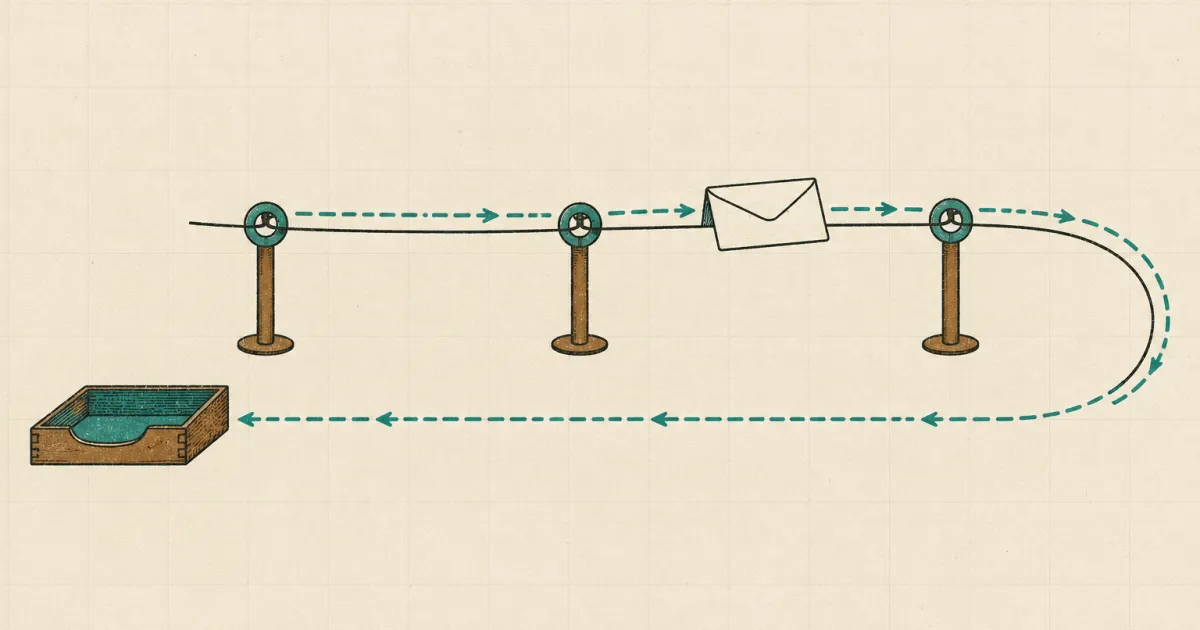
An overseas transfer does not necessarily arrive on the day you send it. It passes through many points: holidays in Japan and at the destination, checks by the remittance company, intermediary banks on the way, and the procedures of the receiving bank. If the recipient's name or account number is wrong, the money can come back. The money that comes back is not necessarily the same as the amount you sent. At banks, it may be converted again at the rate at the time of return, or fees on the way may be deducted, and the handling differs by company and by the way you sent.
This article is based on the explanation by the Japanese Bankers Association (全国銀行協会), the rules and fee tables of MUFG Bank, SMBC (Sumitomo Mitsui Banking Corporation) and Rakuten Bank, and the official pages and terms of Wise, SBI Remit, Instarem, DCOM and Smiles (checked on October 8, 2026). It sets out the order of things to check when money does not arrive, and how cancellation, recall and refunds are handled. For the actual procedure, follow the guidance of the company you sent with.
Delays happen in three places: the payment, the remittance company's checks, and the receiving bank
Wise explains the places where a transfer is delayed in three parts: the stage of paying the money, the processing at Wise (most security checks are done here and cannot be made faster), and the recipient's bank. Banks do not process on weekends and public holidays, so if it is a holiday either in Japan or at the destination, the transfer is delayed by that much.
With a bank's overseas remittance, the money is not sent right away on the day you apply. MUFG Bank's online overseas remittance accepts applications 24 hours a day, but the money is actually sent on the next business day or the business day after that. It may be delayed further when a check is needed, when many requests come at once, or when it is a holiday at the destination. Rakuten Bank gives the estimated time until arrival as "roughly the remittance date plus 1 to 5 business days" (「おおむね送金日+1営業日~5営業日程度」) and writes that it may take longer because of procedures or regulations on the receiving side.
Checks by the remittance company are also a cause of delay. MUFG Bank says it may check by phone your occupation, the purpose of the transfer, the source of the funds, your relationship with the recipient and so on, and that it cancels the request if it cannot reach you and a certain period passes. Smiles writes in its terms that it checks every transaction against lists of sanctioned persons and that, as a result, a transfer may be delayed or refused.
- PaymentUntil the money reaches the remittance company. With a bank transfer, the procedure starts after the remittance company confirms that the money has come in.
- Checks and sending out by the remittance companyIdentity check, checks on the purpose of the transfer and the source of funds, and screening against sanctions lists. If you do not answer when contacted, the transfer may be cancelled.
- Intermediary banksA bank transfer (SWIFT) goes through one or more banks depending on the currency and the way it is sent. Which banks it passes through is not known in advance.
- Receiving bankCrediting to the account. If the name or account number does not match, the money may be returned without being credited. Holidays at the destination also have an effect.
"Completed" on the screen does not necessarily mean the money is in the recipient's account. Wise's "transfer complete" means that Wise has sent the money to the recipient's bank, and it may take up to 1 more business day from there until it is in the account. SBI Remit explains that for deposits to an account it cannot confirm the crediting, so it shows "received" (受取済み) if no error notice comes within a certain period, and that an error can still come later in some cases.
With a bank transfer, you cannot know before sending which banks it will pass through
According to the Japanese Bankers Association, overseas remittances are normally sent through SWIFT, a messaging system between banks. Depending on the currency and the way it is sent, a transfer may pass through one or more intermediary banks, including banks located in a third country, and the association says that at the time of acceptance a Japanese bank cannot know whether there is an intermediary bank, or its name and location (「経由銀行の有無や経由銀行名およびその所在地を把握できません」). SMBC also states that the countries a transfer passes through are decided by the overseas intermediary banks, so it cannot answer at the time of acceptance.
Depending on the route, both the number of days and the fees may increase. MUFG Bank warns that if no remittance route is set for the bank code that was entered (BIC, also called SWIFT code), the following can happen: late arrival, extra fees at intermediary banks, a refund after fees have been deducted, or cancellation and a new request. It also writes that in countries that use IBAN (International Bank Account Number), if the IBAN is missing, the money may come back with fees deducted.
Four things to check first when money has not arrived
These are the things for the sender to check first. You can check all of them yourself before you contact the remittance company.
- The status shown for the transfer. What you can do differs depending on whether it is waiting for payment, processing or completed.
- Messages from the remittance company. Have you been asked for more information by email or phone? Wise says that if there is no reply within 2 business days to a request for information, or to an email telling you that the transfer has come back, it cancels the transfer and refunds it.
- Whether the recipient's name, account number (IBAN in countries that need it) and bank code (BIC) match the details registered for the recipient's account, letter for letter.
- Holidays in Japan and at the destination, and whether you were past the cut-off time. With SMBC's online overseas remittance, even a request made by 14:00 for a foreign-currency transfer or by 11:00 for a yen transfer may not be sent the same day, depending on checks.
There are also things the recipient can check. Wise states that when money does not arrive after the transfer is complete, the recipient can show the Wise transfer receipt to their own bank and ask it to look into the transfer.
If it still does not arrive, the sending side makes a trace request
With a bank transfer, the procedure in which the sender's bank asks the overseas bank is called a trace request or inquiry (照会). MUFG Bank's rules say that when the money has not been paid to the recipient, you should tell the handling branch early, and the bank investigates, for example by asking the intermediary bank, and tells you the result. They also provide that if the intermediary bank refuses the payment, the money is returned through the recall procedure.
A trace request may have a fee. SMBC sets the fee for sending an inquiry letter to an overseas bank when money has not arrived at ¥4,000 per case. Rakuten Bank's trace fee is ¥3,000, and it is charged even when the result could not be found out. DCOM writes in its terms that it investigates a transfer that has not arrived if asked.
When cancellation or recall is possible, and the fee, differ by company
At banks, the procedure for getting back money while the transfer is on the way is called a recall (組戻し). At MUFG Bank, a recall is also needed to change the amount or the intermediary bank. Until when you can cancel, and how much the fee is, differ by company.
| Company | When cancellation or recall is possible | Fee |
|---|---|---|
| MUFG Bank | Changes and recalls after sending online are requested by phone to an operator. They may be refused by the intermediary bank or stopped by laws and regulations. Recall is not available for transfers in Philippine pesos (the same applies to Indian rupees and Pakistani rupees) | Recall ¥4,000, change of details ¥4,000. The first remittance fee is not returned, and intermediary bank fees may be charged later |
| SMBC (Sumitomo Mitsui Banking Corporation) | Online, you can request cancellation (recall) from the screen. The refund is made only after the money comes back from the intermediary bank, and the recall may be refused | Recall ¥4,000, change ¥4,000. Receiving the money in the same currency involves a lifting charge and other fees |
| Rakuten Bank | Accepts recall, trace and change requests | ¥3,000 each for recall, trace and change. Charged even when the money did not come back, the result could not be found out, or the change could not be made |
| Wise | You can cancel by yourself before paying. While it is processing, cancellation may be possible if you contact Wise quickly, but this is not certain. It cannot be cancelled after completion | Cancellation and refunds are free in principle. When money comes back by SWIFT, fees of intermediary banks and others may be deducted |
| SBI Remit | The details of a request cannot be changed. Cash pickup can be cancelled before the money is picked up, but a deposit to an account cannot be cancelled once the procedure is finished | Cancellation only when the overseas partner agrees. The partner may ask for a recall fee |
| DCOM | When DCOM judges it possible, you request by phone and attach a copy of an identity document. Not possible after the deposit to the account has been approved or after the recipient has withdrawn the money | Up to ¥2,000 per change or cancellation |
| Smiles | In principle changes cannot be made, so you cancel and send again. A transfer that the recipient did not pick up within the set number of days is cancelled | Only the remittance funds are refunded. The remittance fee and other fees are not returned |
Checked on each company's official pages, rules and terms on October 8, 2026. Conditions can change, so check with the company before the procedure.
Source: each company's fee table and terms (checked on October 8, 2026). Wise is free in principle. SBI Remit, Smiles and Instarem do not publish a single fixed amount for a recall fee.
Show the figures as a table
| Company | Recall or cancellation fee |
|---|---|
| MUFG Bank | ¥4,000 |
| SMBC | ¥4,000 |
| Rakuten Bank | ¥3,000 (charged even if the money does not come back) |
| DCOM | Up to ¥2,000 |
The amount that comes back changes with the conversion rate and the fees deducted
How returned money is handled differs by company and by the way you sent. Under the rules of MUFG Bank (when the money comes back in a currency different from the one sent) and Rakuten Bank, the money is converted again at the rate at the time of return. It does not go back to the rate at the time of sending, so the yen amount differs from the amount you sent. The rules and guidance of MUFG Bank, Rakuten Bank, DCOM, Smiles and others also state handling such as the first remittance fee not being returned and intermediary bank fees being deducted. On the other hand, some companies, like Wise, say that in principle they refund the full amount paid, except when the money was sent by SWIFT.
| Company | Conversion rate | What is deducted or not returned |
|---|---|---|
| MUFG Bank | When the money comes back in a currency different from the one sent, MUFG Bank's rate at the time the refund is calculated | The first remittance fee is not returned. Intermediary bank fees may be charged later |
| SMBC (Sumitomo Mitsui Banking Corporation) | No rate is stated, but the guidance says the refund is affected by exchange rates | Says a loss may result from the intermediary bank's recall fee and the effect of exchange rates |
| Rakuten Bank | Converted into yen at a general interbank rate. The rules say that because the rate at the time of return is used, an exchange loss may occur (「為替差損が発生する場合があります」) | Fees of the intermediary bank and the receiving bank are deducted. Rakuten Bank's remittance fee and other fees may also not be returned |
| DCOM | DCOM's rate on the day the full amount comes back from the paying bank or similar | Fees of the paying bank and others are deducted. Refunds are normally made within 30 days, to a bank account only |
| Smiles | The rate at the time of cancellation | Only the remittance funds are refunded. The user pays the bank transfer fee for the refund, and the remittance fee and other fees are not returned |
| Instarem | The rate at that time (terms of use) | There is no fee for a refund, but for a refund caused on the user's side, the exchange loss is deducted |
| SBI Remit | (Not published) | When a cancellation succeeds, in principle the remittance amount and an amount equal to the remittance fee are returned in yen to the remittance reserve account (送金準備金の口座). However, in some cases the partner does not return the remittance fee, or asks for a recall fee, and for cancellations and error refunds of account deposits in Vietnam the remittance fee is not returned (the recall fee is free). The fee paid when adding money is not returned. Withdrawing from the account has a bank transfer fee (¥51–265) |
Checked in each company's rules, terms and official pages on October 8, 2026. Wise says it refunds the full amount in principle, but fees may be deducted when money comes back by SWIFT, and we could not find guidance on the exchange rate used at the time of refund.
The number of days until the money comes back is also described differently by each company. Wise says that a transfer refused by a bank may take up to 5 business days or more to come back to Wise, and that a refund to a bank transfer takes 0–3 business days. DCOM says it normally processes refunds within 30 days. For the three banks, we did not find guidance that shows the number of days a recall takes.
Where to ask for help when you cannot settle it with the remittance company
First, contact the company you sent with. If that does not solve the problem, you can use the consultation desks listed by the Financial Services Agency (FSA) under Financial ADR (金融ADR). For bank transfers, the desk is the Japanese Bankers Association consultation office (全国銀行協会相談室). For remittance services of funds transfer service providers (資金移動業者), it is the customer consultation office (お客さま相談室) of the Japan Payment Service Association (日本資金決済業協会). Both first accept the matter as a complaint, and move to a dispute resolution procedure when that does not solve it.
| Company you sent with | Where to consult | Phone number and hours |
|---|---|---|
| Banks (MUFG Bank, SMBC, Rakuten Bank and others) | Japanese Bankers Association consultation office (全国銀行協会相談室) | 0570-017109 or 03-5252-3772 (weekdays 9:00–17:00) |
| Funds transfer service providers (Wise, SBI Remit, Instarem, DCOM, Smiles and others) | Japan Payment Service Association customer consultation office (日本資金決済業協会「お客さま相談室」) | 03-3556-6261 (10:00–17:00) |
Checked in the FSA list of Financial ADR desks (as of September 9, 2025). The FSA Counseling Office for Financial Services Users (金融サービス利用者相談室, 0570-016811) gives advice and tells you which desk to use, but it does not mediate individual disputes.
What you can do before sending
Among the causes of money not arriving or coming back, input mistakes and not answering messages can be prevented by checking before sending and right after sending.
- Enter the recipient's name exactly as it is registered for the recipient's account. For transfers to South Korea, for example, a difference in the order of the name may mean a procedure is needed on the receiving side.
- Check the bank code (BIC) and, in countries that need it, the IBAN (International Bank Account Number) in the guidance of the recipient's bank. The BIC takes priority over the bank name.
- Write the purpose of the transfer specifically. Some banks, like MUFG Bank, ask you to write it in English because the information is sent overseas.
- After sending, answer emails and calls from the remittance company early. If there is no reply, the transfer may be cancelled.
- Keep the transfer receipt and the reference number. They are used for a trace request and for an investigation on the recipient's side.
Procedures for each destination are in the sending guides by destination, and the total cost that combines fees and the exchange rate is in the remittance cost comparison table. For what happens with transfers over ¥1,000,000 (1 million yen), see the article on the 1 million yen per-transfer cap.
See what your recipient gets after fees and the exchange rate in the comparison table for each destination.
Related pages
Sources
Figures, legal articles and provider rules in this article were checked on the official pages below. They may have changed after the verification date.
- Japanese Bankers Association: about overseas remittance (外国送金について)Verified 2026-10-08
- Japanese Bankers Association: about overseas remittance (外国送金について), intermediary banksVerified 2026-10-08
- Wise Help (transfer delays; what transfer complete means)Verified 2026-10-08
- MUFG Direct: overseas remittance (外国送金)Verified 2026-10-08
- Rakuten Bank: overseas remittance, product overview (海外送金 商品概要)Verified 2026-10-08
- Smiles remittance service terms of use (送金サービス利用規約)Verified 2026-10-08
- SBI Remit frequently asked questions (よくあるご質問)Verified 2026-10-08
- SBI Remit terms of use (利用規約), Articles 38 and 39Verified 2026-10-08
- SMBC: about overseas remittance procedures (海外送金のお手続きについて)Verified 2026-10-08
- MUFG Bank: notes by country (国別の留意事項)Verified 2026-10-08
- MUFG Bank: notes by country (国別の留意事項), recallVerified 2026-10-08
- MUFG Bank: rules for overseas remittance transactions (外国送金取引規定)Verified 2026-10-08
- Wise Help (cancelling a transfer; wrong recipient details)Verified 2026-10-08
- SMBC: overseas remittance (外国送金), acceptance hoursVerified 2026-10-08
- MUFG Bank: rules for overseas remittance transactions (外国送金取引規定), Article 9Verified 2026-10-08
- SMBC: foreign exchange related fees (外国為替関連手数料, PDF)Verified 2026-10-08
- Rakuten Bank: overseas remittance, product overview (海外送金 商品概要), feesVerified 2026-10-08
- DCOM overseas remittance terms (海外送金取引規約)Verified 2026-10-08
- MUFG Bank: foreign exchange related fees (外国為替関連手数料)Verified 2026-10-08
- MUFG Bank: rules for overseas remittance transactions (外国送金取引規定), Article 7Verified 2026-10-08
- Rakuten Bank: overseas remittance, fees (海外送金 手数料)Verified 2026-10-08
- Rakuten Bank overseas remittance rules (海外送金規定)Verified 2026-10-08
- Instarem terms of use (§3.9 and the Japan annex)Verified 2026-10-08
- SBI Remit: about refunds (返金について)Verified 2026-10-08
- Wise Help (refund fees and number of days)Verified 2026-10-08
- Wise Help: Guide to KRW transfers (order of the name)Verified 2026-10-09
- MUFG Bank: requests concerning overseas remittance transactions, ISO20022 version (外国送金取引に関するお願い(ISO20022対応版))Verified 2026-10-08
- Financial Services Agency: list of Financial ADR desks (金融ADR制度) / Counseling Office for Financial Services Users (金融サービス利用者相談室)Verified 2026-10-08