How many kinds of fees are taken from an overseas bank transfer from Japan?
The cost of an overseas remittance from a bank is not only the sending bank's remittance fee. There is a fee for sending in yen as it is, a fee included in the exchange rate, and fees of the intermediary banks on the way and of the receiving bank. For the last two, the amount may not be fixed at the time you send.
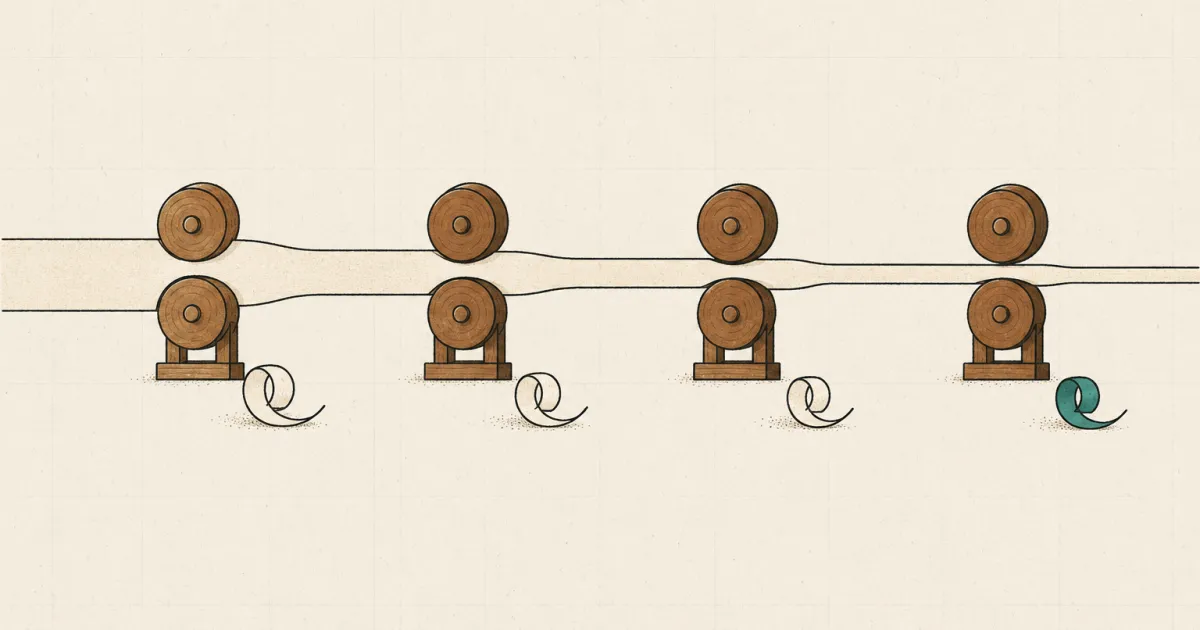
When you send money abroad from a bank, it is easy to estimate the cost by looking only at the "remittance fee" (送金手数料) line of the fee table. At the top of its own fee page, Rakuten Bank explains that the cost of an overseas remittance includes fees paid to the bank that sends the money, fees paid to intermediary banks and the receiving bank, and the exchange cost that arises when yen is changed into a specific currency (「送金を行う銀行に払う手数料や、中継銀行・受取銀行に支払う手数料、円から特定通貨に両替する際に発生する両替費用など」). The fee paid to the sending bank, the exchange cost, and the fees of the banks on the way and on the receiving side are charged separately.
This article is based on the fee tables and guidance of MUFG Bank, SMBC (Sumitomo Mitsui Banking Corporation) and Rakuten Bank (checked on October 8, 2026). It sets out the kinds of fees and their names, the amounts, and whether each is known at the time you send. The amounts are from each bank's guidance for individuals. Conditions for companies and for sending from a foreign currency deposit are not covered.
Fees arise in four places: the sending bank, the exchange, the banks on the way, and the receiving bank
SMBC explains its own fees in three parts. They are the "remittance fee" (送金手数料) for sending the payment instruction to the recipient's bank, the "lifting charge" (リフティングチャージ) when you pay in the same currency as the transfer, and the "related bank fee" (関係銀行手数料) when the sender bears the fees that arise at the recipient's bank and intermediary banks. On top of these comes the exchange cost when yen is changed into a foreign currency.
| Cost | Paid to | Is the amount known at the time of sending? |
|---|---|---|
| Remittance fee | Sending bank | Yes (it is in the fee table) |
| Yen exchange handling fee (円為替取扱手数料) or lifting charge (when sending in yen as it is, or in the same currency) | Sending bank | Yes (a fixed amount, or 0.05% of the transfer amount with a minimum) |
| Exchange fee (when yen is changed into a foreign currency) | Sending bank | Included in the rate. Which point in time the rate is taken from differs by bank (for MUFG Bank's online remittance, the time of execution) |
| Intermediary bank fee | Banks the transfer passes through on the way | May not be known, because the banks on the route are not known in advance |
| Receiving bank fee | Bank on the receiving side | May not be known. The receiving bank decides it |
Arranged by this site from the fee tables and guidance of MUFG Bank, SMBC and Rakuten Bank (checked on October 8, 2026). The names differ a little from bank to bank.
- Sending bankRemittance fee. If you send in yen as it is, also the yen exchange handling fee (at Rakuten Bank, the lifting charge).
- Exchange from yen to a foreign currencyThe exchange fee is included in the bank's rate (TTS at MUFG Bank and SMBC).
- Intermediary banksA fee may be deducted at each bank the transfer passes through. Which banks it passes through is not known in advance.
- Receiving bankThe fee of the bank on the receiving side. Rakuten Bank treats it as borne by the recipient.
The remittance fee changes with how you apply and which bank you send to
The remittance fee at the top of the fee table changes depending on whether you apply online or at a counter, and whether the destination is the bank's own overseas office or another bank.
| Bank | Online | Counter |
|---|---|---|
| MUFG Bank | ¥2,500 to the bank's own overseas offices, ¥3,000 to other banks | ¥7,000 (Overseas Remittance Web Support Plus, 外国送金Webサポート+) |
| SMBC (Sumitomo Mitsui Banking Corporation) | ¥3,000 to overseas branches, local subsidiaries and partner banks, ¥3,500 to other banks overseas | ¥7,000 / ¥7,500 |
| Rakuten Bank | ¥750 | — |
Checked in each bank's fee table on October 8, 2026 (for MUFG Bank, the table "as of October 1, 2026"). All 3 banks state that consumption tax is not charged on overseas remittance fees. Rakuten Bank's fee table has no column for a counter.
Source: each bank's fee table (checked on October 8, 2026). When you send in yen as it is, a yen exchange handling fee or similar is charged separately.
Show the figures as a table
| Bank | Remittance fee (per transfer) |
|---|---|
| SMBC | ¥3,500 |
| MUFG Bank | ¥3,000 |
| Rakuten Bank | ¥750 |
Even when the remittance fee is low, the total changes if the other costs are large. For example, Rakuten Bank's remittance fee is ¥750, but when you send in yen as it is, a yen remittance fee (円貨送金手数料, lifting charge) of ¥3,000 is charged separately. At MUFG Bank and SMBC too, sending in yen as it is adds a fee of at least ¥2,500. Banks' costs cannot be compared from the remittance fee line alone.
Sending in yen as it is has a fee separate from the remittance fee
When you send Japanese yen as it is without changing it into a foreign currency, the sending bank does not change yen into a foreign currency, but a different fee is charged in its place. The name and the amount differ by bank.
- MUFG Bank: when sending in yen, a yen exchange handling fee (円為替取扱手数料; 0.050% of the transfer amount, minimum ¥2,500) in addition to the remittance fee.
- SMBC: when sending in yen, a yen exchange handling fee (0.05% of the transfer amount, minimum ¥2,500). When sending a foreign currency in the same currency, a lifting charge (0.05% of the transfer amount, minimum ¥2,500 or USD 25).
- Rakuten Bank: when sending in yen, a yen remittance fee (円貨送金手数料, lifting charge) of ¥3,000.
Even under the same name "lifting charge", at SMBC it means the fee when a foreign currency is sent in the same currency, and at Rakuten Bank it means the fee when sending in yen. When you read a fee table, look at the explanation of "for which way of sending the fee is charged" more than at the name.
The exchange fee is not in the fee table. It is inside the rate
When you change yen into a foreign currency and send it, the bank exchanges at its own rate. MUFG Bank calls the rate for changing yen into a foreign currency TTS (telegraphic transfer selling rate, 電信売相場), and states that for online overseas remittance it uses the TTS at the time the transfer is executed, not at the time you apply. If the rate moves between applying and execution, the amount you pay in yen changes too.
SMBC publishes, by currency, the exchange fee it applies to online overseas remittance. Examples are ¥1 per US dollar, ¥1.4 per euro and ¥4 per British pound. For example, if you send USD 1,000, the exchange fee comes to ¥1,000 (a calculation example by this site). This fee is separate from the remittance fee in the fee table, and you pay it in the form of being included in the rate.
Rakuten Bank's rate is a general interbank exchange rate plus Rakuten Bank's exchange fee. In addition, from around 17:00 on a business day to around 10:00 on the next business day a night rate of 1.0075 times applies, and from around 17:00 on the business day before a non-business day to around 10:00 after the holiday a holiday rate of 1.015 times applies. Rakuten Bank itself describes these as "higher-priced rates" (割高なレート). This means the cost also changes with the time of day you apply.
Intermediary bank and receiving bank fees may not be fixed at the time of sending
According to the Japanese Bankers Association (全国銀行協会), an overseas remittance may pass through one or more intermediary banks depending on the currency and the way it is sent, and at the time of acceptance a Japanese bank cannot know whether there is an intermediary bank, or its name and location. Since the route is not known, the fees deducted on the way are not fixed at the time of sending either.
Each bank lets you choose whether the sender or the recipient bears these fees (in some cases there is no choice). When the sender bears them, the handling is as follows.
| Bank | Amount paid when sending | When more is charged later |
|---|---|---|
| MUFG Bank | Paying bank fee (支払銀行手数料) ¥3,000 (online with MUFG Direct, only "borne by the recipient" is available) | If the paying bank charges more than ¥100,000, the difference is charged |
| SMBC (Sumitomo Mitsui Banking Corporation) | Related bank fee (関係銀行手数料) ¥2,500 | If the charge from the receiving bank or intermediary banks is over ¥4,000, the difference from ¥2,500 is charged at a later date. Neither the amount nor the timing is fixed at the time of sending |
| Rakuten Bank | Intermediary bank fee ¥1,000 (only the intermediary bank fee can be chosen; the receiving bank fee is borne by the recipient) | Fees charged by the intermediary bank or the receiving bank after the transfer may be charged to you |
Checked in each bank's fee table and guidance on October 8, 2026. SMBC and Rakuten Bank warn that even when the sender bears the fees, some banks on the receiving side deduct a fee.
When the recipient bears them, the intermediary bank fees are deducted from the transfer amount. Rakuten Bank says that the amount differs by intermediary bank and that the total can be ¥1,000 or more. MUFG Bank writes that overseas intermediary banks, including its own overseas branches and local subsidiaries, may deduct fees. Wise explains that intermediary bank fees differ by bank, are generally the equivalent of USD 15–50 and sometimes more, and cannot be avoided for SWIFT transfers.
The amount received changes between "borne by the sender" and "borne by the recipient"
On who pays the intermediary bank and receiving bank fees, SBI Remit explains with the words OUR and SHA. OUR is the method where the sender bears these fees and the recipient can receive the specified amount. SHA is the method where the recipient bears them and the amount received may differ from the amount sent. In Japanese banks' fee tables these are written as "borne by the sender" (依頼人負担) and "borne by the recipient" (受取人負担).
When you want a fixed amount to reach your family, check whether you can choose "borne by the sender". However, in some cases only "borne by the recipient" can be chosen, as with MUFG Bank's online remittance, and even with "borne by the sender" the receiving bank may deduct a fee. Whether the fixed amount reaches the recipient depends, in the end, also on how the receiving bank handles it.
When you compare, look at the amount your family receives
Listing the costs so far, these are the points to check when you compare.
- The remittance fee (it changes with how you apply and which bank you send to).
- Whether you send after changing into a foreign currency, or in yen as it is. In yen as it is, a yen exchange handling fee or similar is charged.
- The fee included in the exchange rate. Compare by the gap from the mid-market rate. Which point in time the rate is taken from, and whether it changes with the time of day you apply, also differ by bank.
- Who bears the intermediary bank and receiving bank fees. If the sender bears them, the conditions under which a difference is charged later.
- The amount the recipient actually receives. In the end, compare by this amount.
Remittance services other than banks (funds transfer service providers, 資金移動業者) show fees and the amount received in a different way from banks. Differences such as the amount that can be sent at one time are in the article on the 1 million yen per-transfer cap, fees when a transfer does not arrive are in the article on transfers that do not arrive or come back, and each provider's total cost can be checked in the remittance cost comparison table.
See what your recipient gets after fees and the exchange rate in the comparison table for each destination.
Related pages
Sources
Figures, legal articles and provider rules in this article were checked on the official pages below. They may have changed after the verification date.
- Rakuten Bank: overseas remittance, fees (海外送金 手数料)Verified 2026-10-08
- SMBC: overseas remittance (外国送金), explanation of feesVerified 2026-10-08
- MUFG Bank: foreign exchange related fees (外国為替関連手数料)Verified 2026-10-08
- SMBC: about overseas remittance procedures (海外送金のお手続きについて), feesVerified 2026-10-08
- Rakuten Bank: overseas remittance, product overview (海外送金 商品概要)Verified 2026-10-08
- SMBC: foreign exchange related fees (外国為替関連手数料, PDF)Verified 2026-10-08
- MUFG Direct: overseas remittance (外国送金)Verified 2026-10-08
- MUFG Bank: foreign exchange glossary (外国為替用語集)Verified 2026-10-08
- SMBC: overseas remittance (外国送金), exchange feeVerified 2026-10-08
- Japanese Bankers Association: about overseas remittance (外国送金について), intermediary banksVerified 2026-10-08
- MUFG Bank: foreign exchange related fees (外国為替関連手数料), paying bank feeVerified 2026-10-08
- SMBC: foreign exchange related fees (外国為替関連手数料), related bank feeVerified 2026-10-08
- Wise Help (intermediary bank fees)Verified 2026-10-08
- SBI Remit: fees (手数料), OUR and SHAVerified 2026-10-08